Noni
it also goes by many names such as the cheese fruit, mengkudu, aal, engkudu...
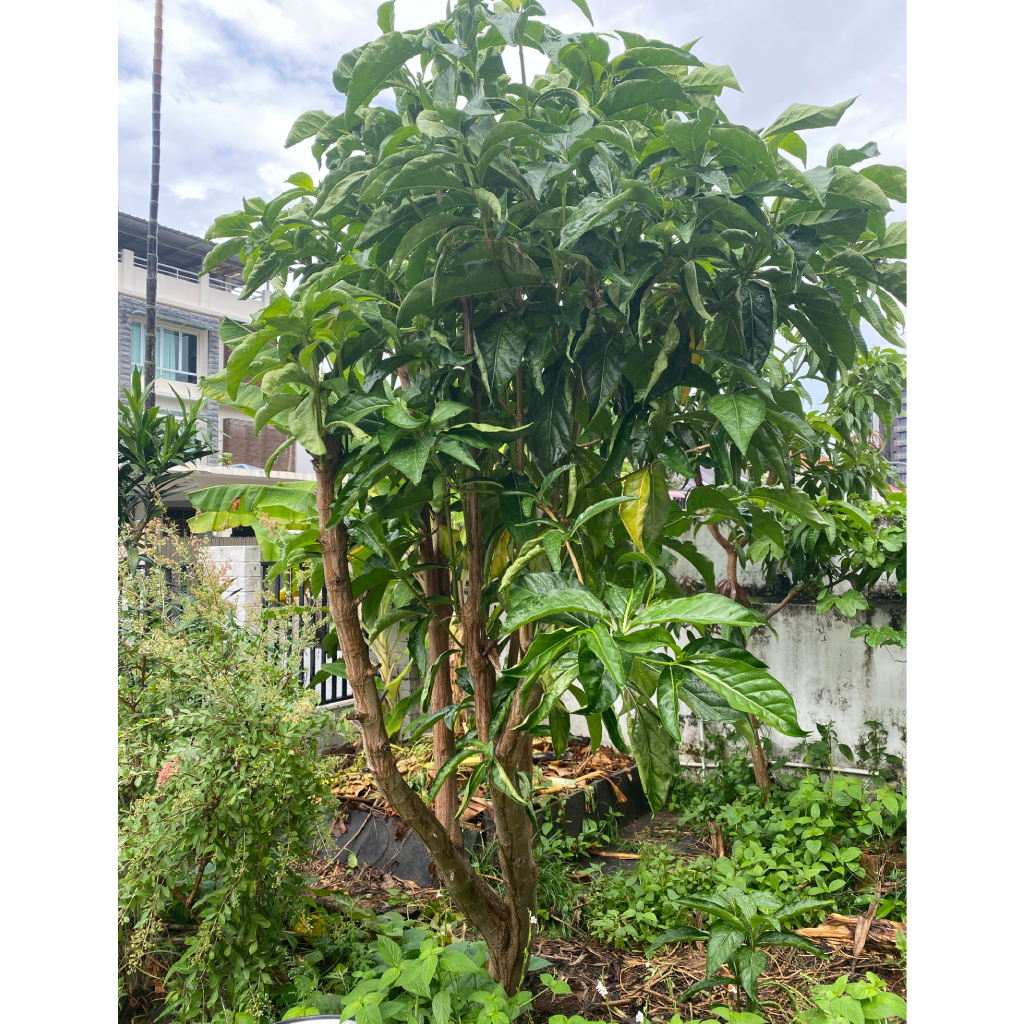
We first learnt the usage of the noni roots as a source of dye colourant while researching traditional dye plants in this region. Its scientific name, Morinda citrifolia, came up In multiple books on textiles from Bali, Java, Sarawak, and further in parts of India. This piqued our curiosity with this otherwise common roadside “weed” that has an ability to sprout in the tightest of corners.
The process of working with this tree for dyeing is considered complex and laborious. What is the more complex part of the procedure is surprisingly not the dyeing, rather the pretreatment of the cotton threads (or cloth) prior (harvesting the roots also requires quite some skilled labour). Typically, a plant-based oil and an alkali are involved, materials that were traditionally gathered and made with what is available in the dyers’ environment. Dhingra (2016) observed dyers from a village in Odisha, an Indian state which borders the Bay of Bengal, using solutions of castor oil, cow dung, and lye made with wood ashes from the kitchen, to knead the threads thoroughly before dyeing was performed.
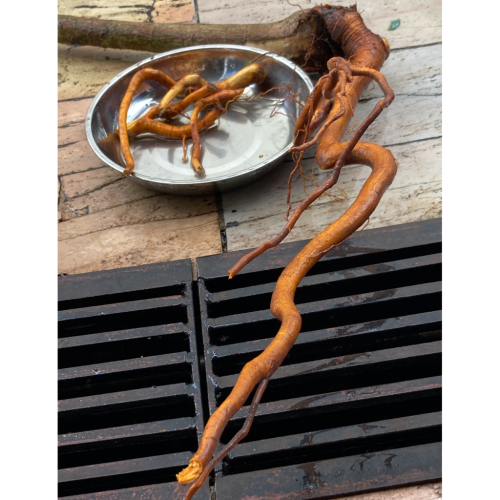
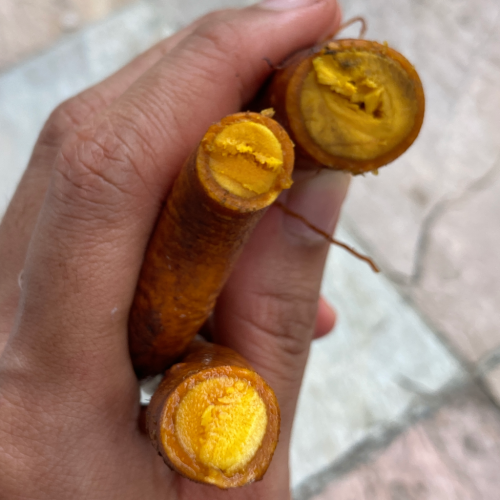
One of the surprises we had was that the roots are not red; they are initially a bright orange-yellow. The root bark itself leaves a slight yellow stain on the hands when touched.
Through pounding and massaging the root bark into a fine pulp with a tiny bit of additional water, a yellow-brown dye was squeezed out. The dye left a stinging sensation on bare palms; we would recommend gloves to be worn at this stage.
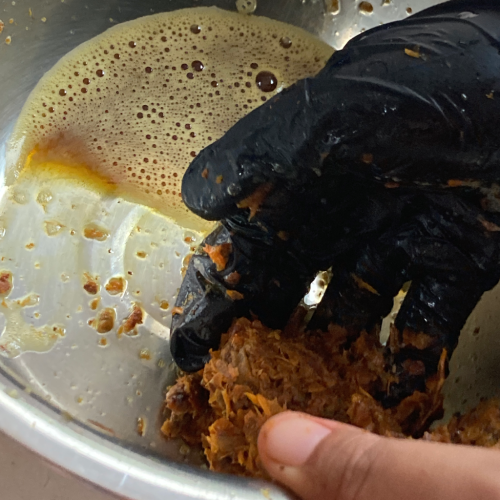
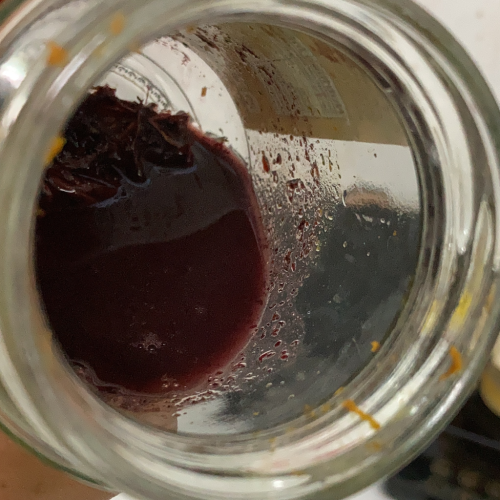
The magic happens with just a tiny pinch of alkali, with the yellow shifting into a red dye with obvious precipitation…
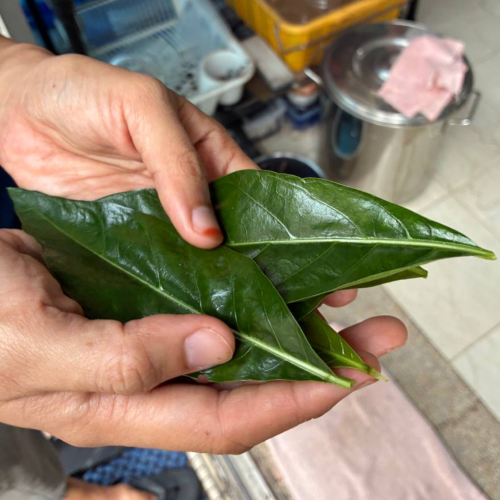
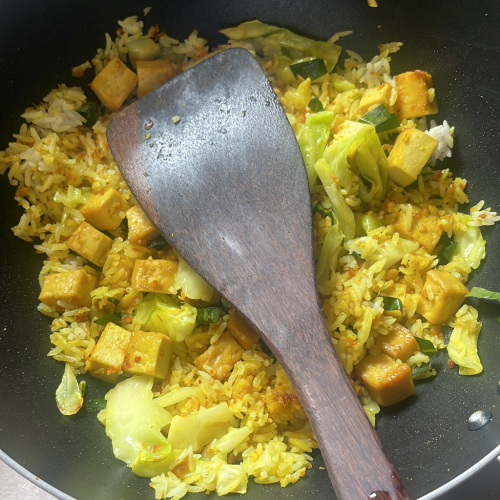
This fruit and leaves of this tree are also edible, though we find them more enticing to people with adventurous palettes. The leaves impart a bitter taste when chewed, but it gives a greater flavour depth with a generous mix of pounded candlenuts, belacan powder, chillis, sand gingers, and garlic. You can see here a recipe for “Nasi Goreng Mengkudu” here, a savoury and fragrant fried rice which includes noni leaves, which we made during one of our Masak-masak Study Group sessions.