
Mulberry
jam, paper fibres, and oven-roasted tea
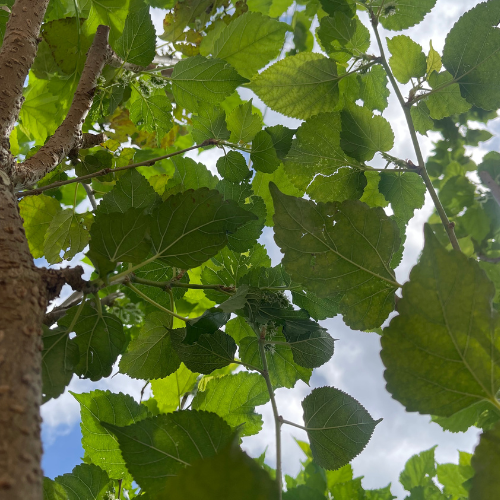
When we first moved into the home studio, we exchanged a bunch of galangal gingers that were thriving in a long concrete planter in the back patio for a mulberry cutting through a Facebook Group called “Plant Swap”. It was quite a small branch, but after planting it in soil, the cutting rooted rather quickly.
The young stem started to grow more leaves and branches, thriving with the sun in the back patio.
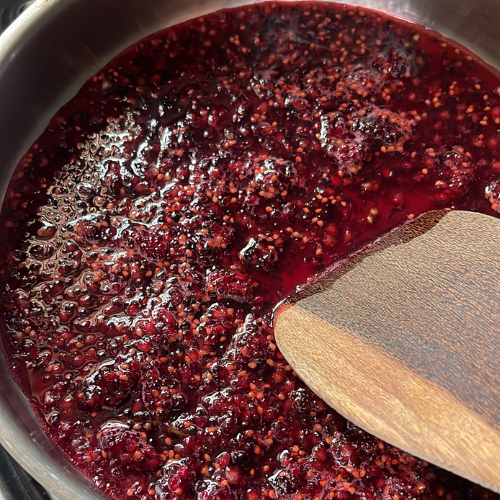
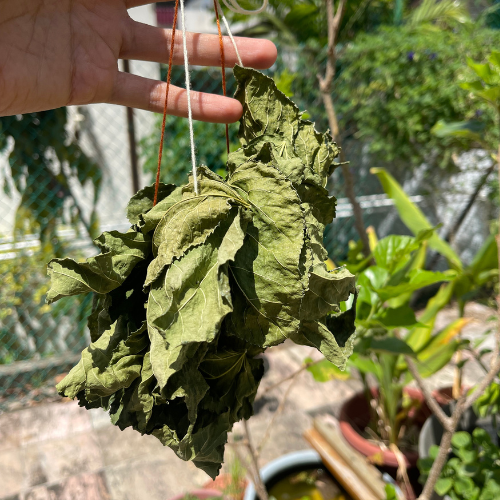
Regeneration
Mulberry is one of the trees that is commonly found in edible gardens around Singapore.
At a communal nature garden in a park at Boon Lay, the gardeners realised that two patches of mulberry plants could be allowed to grow tall so that the long flexible stems could be weaved into a living overhang shelter, holding space for an outdoor classroom. The decision to let the mulberry plants grow tall is not a usual one as pruning of stems encourage fruiting.
Without pruning, the tree does not fruit and the leaves get thick and start to yellow. After pruning, the plant usually bounces back quickly with new shoots and fruits to offer. Through this tree, we learn how a regenerative system of growing and harvesting paper fibres can happen.
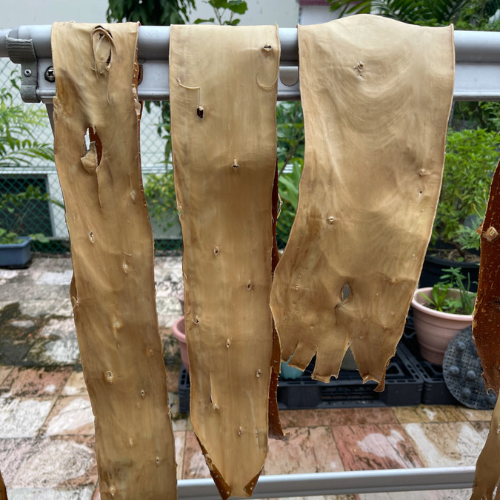
In contrast to the industrial paper making process where a whole tree is cut down to process into fibres, this slower way of gathering allows the tree to keep growing after it is heavily pruned.
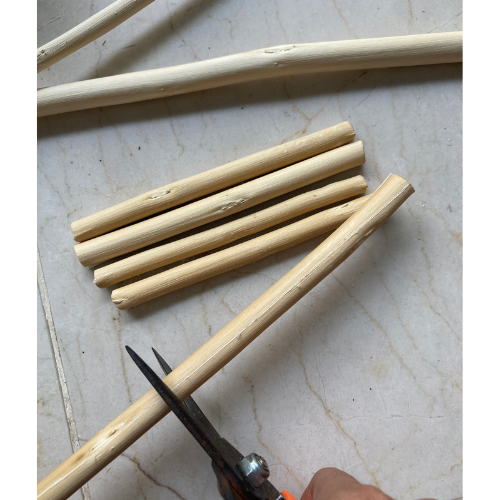
Making Charcoal with Mulberry Sticks
The bark has to be peeled off first. It is easier to do so when the bark is still green. Let the pith dry off for a few days or week. Ideally the wood should not be too wet to make into charcoal.
Cut the sticks into short segments. Suggested length of 15 centimeters. This depends on how long you want your charcoal stick to be, and also the height of your container for the next step.
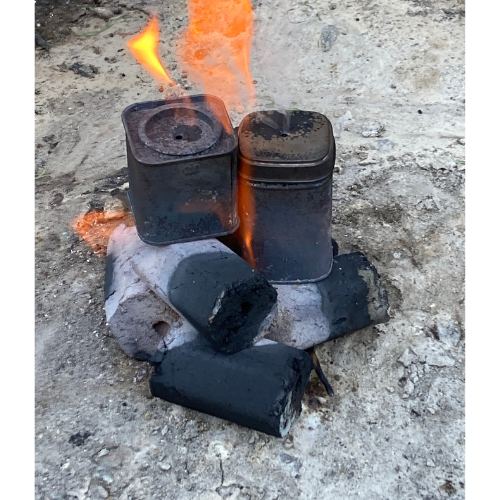
Possibly the most fun part of this process is to start a small fire.
Place the sticks inside a plain metal container with a hole drilled through the top (containers lined with plastic should probably be peeled off first).
Let it sit on the fire for at least an hour. Enjoy the campfire and hopefully you are doing this somewhere with a nice view.
You will probably observe different stages of the charcoal making through the hole at the top. First, there is usually some steam observed as the water evaporates from the sticks. At a certain point, a flame will emerge through the hole, like a candle. That stage does not last long, and it is a sign that the oils from the sticks are escaping, and the carbonization process is going well.
After the flame goes out, slowly stop the fire. Let the container cool down for a few hours, and then you can open it up to check on the sticks.