
Annatto
lipstick tree, achiote, slight spicy nut
Post contributed by Ariel Dong (studio assistant at Wild Dot)
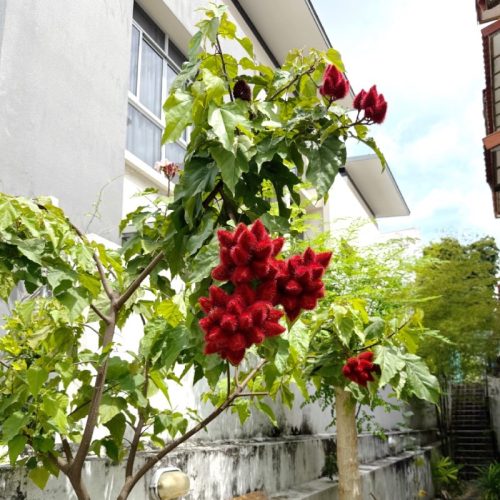
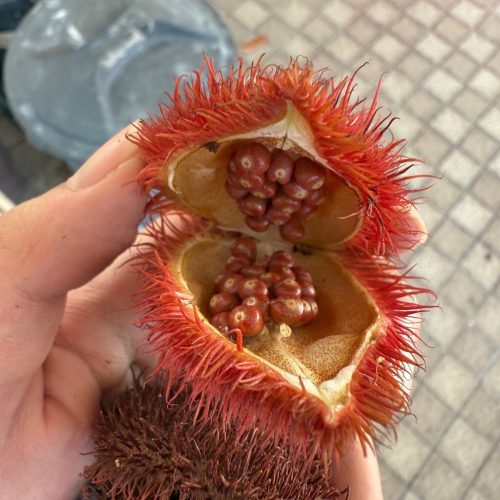
The annatto tree (Bixa orellana), also known as the lipstick tree or achiote, is a hard tree to miss – especially with its bright red and hairy fruit. For those who are unfamiliar with this fruit, it resembles the rambutan on the outside, with a more elongated, diamond-like shape.
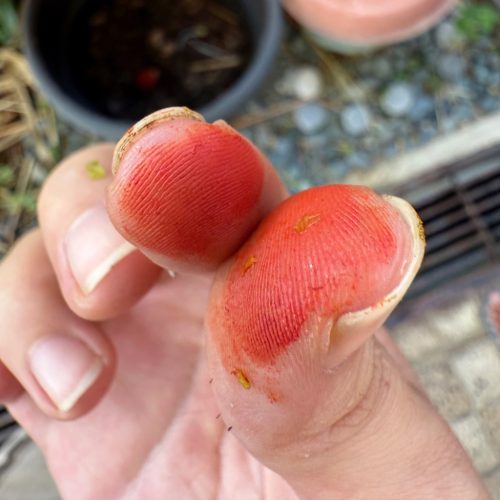
My first encounter with the annatto tree was in Wild Dot’s front garden at their current studio. I plucked one of the fruits, and cracked the soft shell open to reveal bright red seeds. Holding one seed between my fingers and gently pressing down, the seed crumbled into a rich vermillion pigment, staining my fingertips. The orange-red colour resembled the shade of a red lipstick, hence giving one of its common names.
Nature often offers a mirage of vibrant colours, but the richness of the annatto pigment from a single seed evoked something special for me as I examined the seed up close in my hands…A sense of wonder and excitement reminiscent of early childhood days, and even a primal sense of discovery.
Historical and contemporary uses
This tree is native to Mexico and Central and South America, but has found its way into many countries worldwide, including Singapore. It is an evergreen tree that grows easily in subtropical to tropical climates, with fruits that grow year-round, light pink flowers, and heart-shaped leaves. Best known as the source of annatto pigment, the tree has had a long-standing relationship with humans.
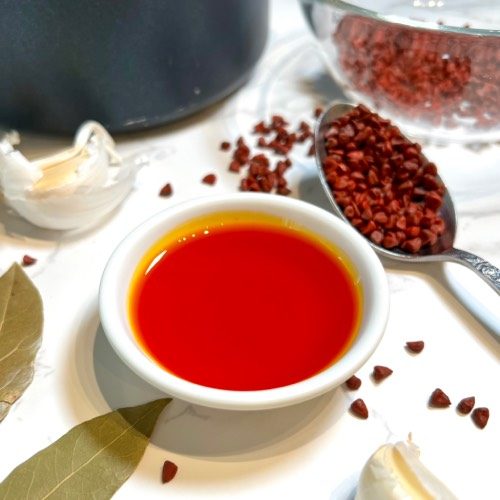
Industrially, it is widely used as a natural food colouring to add yellow and orange colour to many products such as butter, cheese, ice creams, and condiments. Specific to our region, annatto seeds or annatto-infused oil are used as a staple in Filipino cuisine for both its colour and flavour – appearing in dishes such as Kare-Kare and Chicken Inasal. Back in 2022, we held an event Warna Warni in collaboration with Hafiz Rashid and Sayurstory at The Black Sampan, opening a conversation about the many ways in which naturally-derived colours can function beyond perception and information, as shared knowledge, a foundation of community and a sense of reconnection to the natural world. We held a Tangyuan (汤圆) making workshop, where we used annatto pigment to give our tangyuans a vibrant orange colour.
Making Pigments
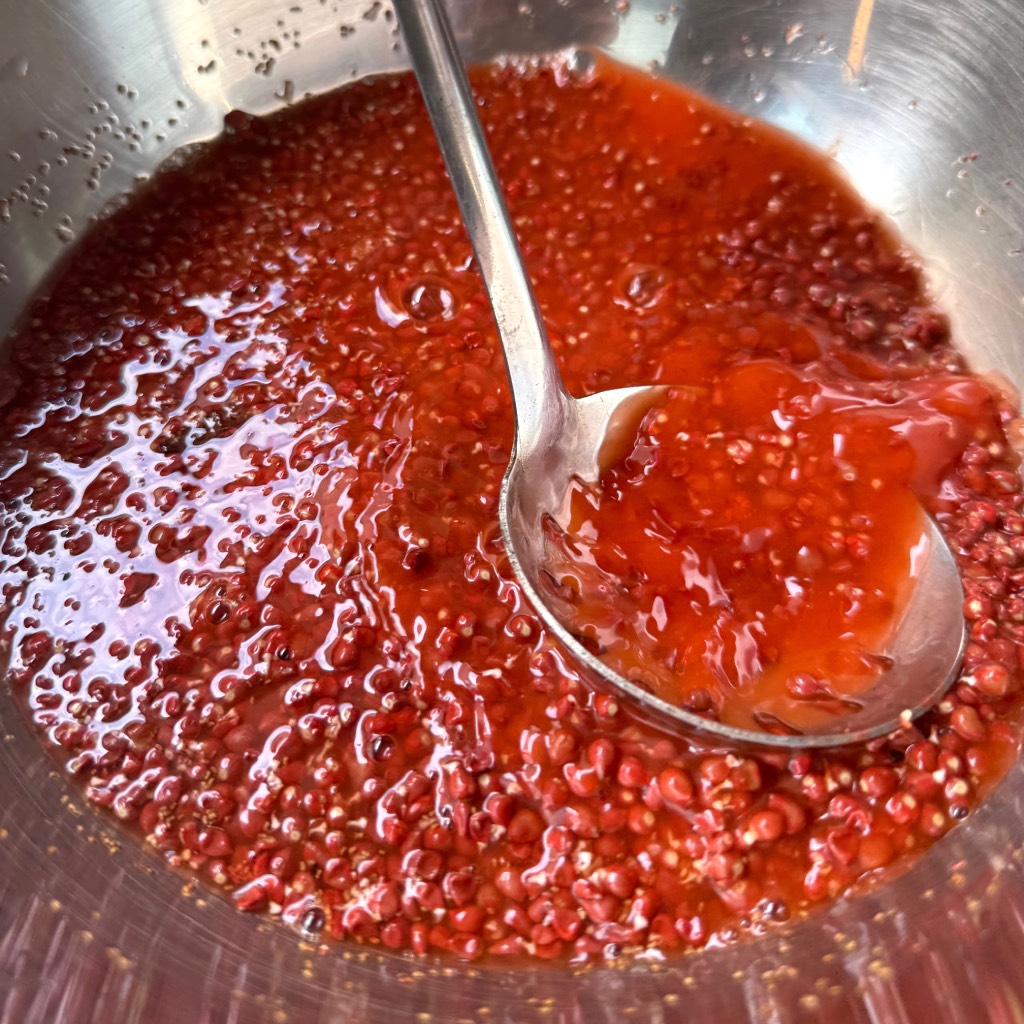
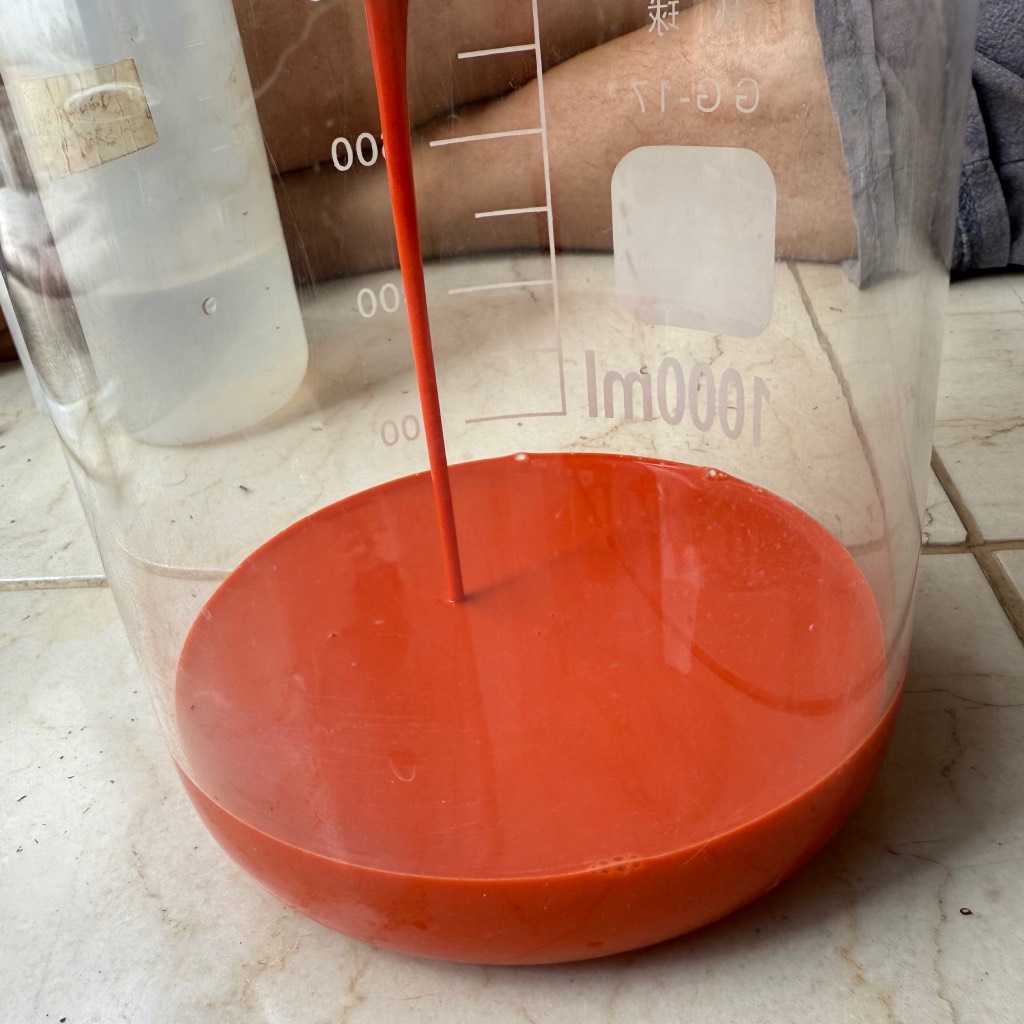
Submerging the fresh seeds in water, a spatula is used to rub and press them until the water turns into a viscous and opaque red. The remaining inner seeds are typically a creamy white.
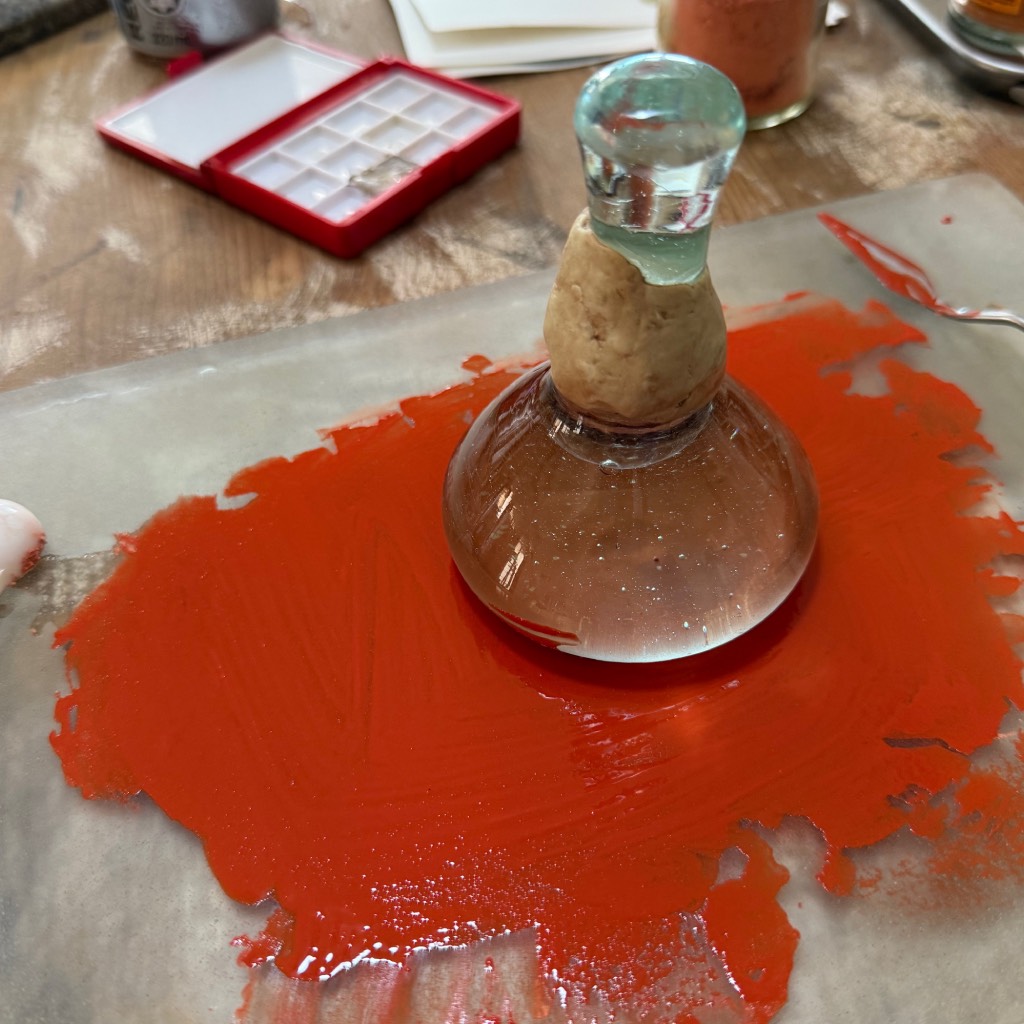
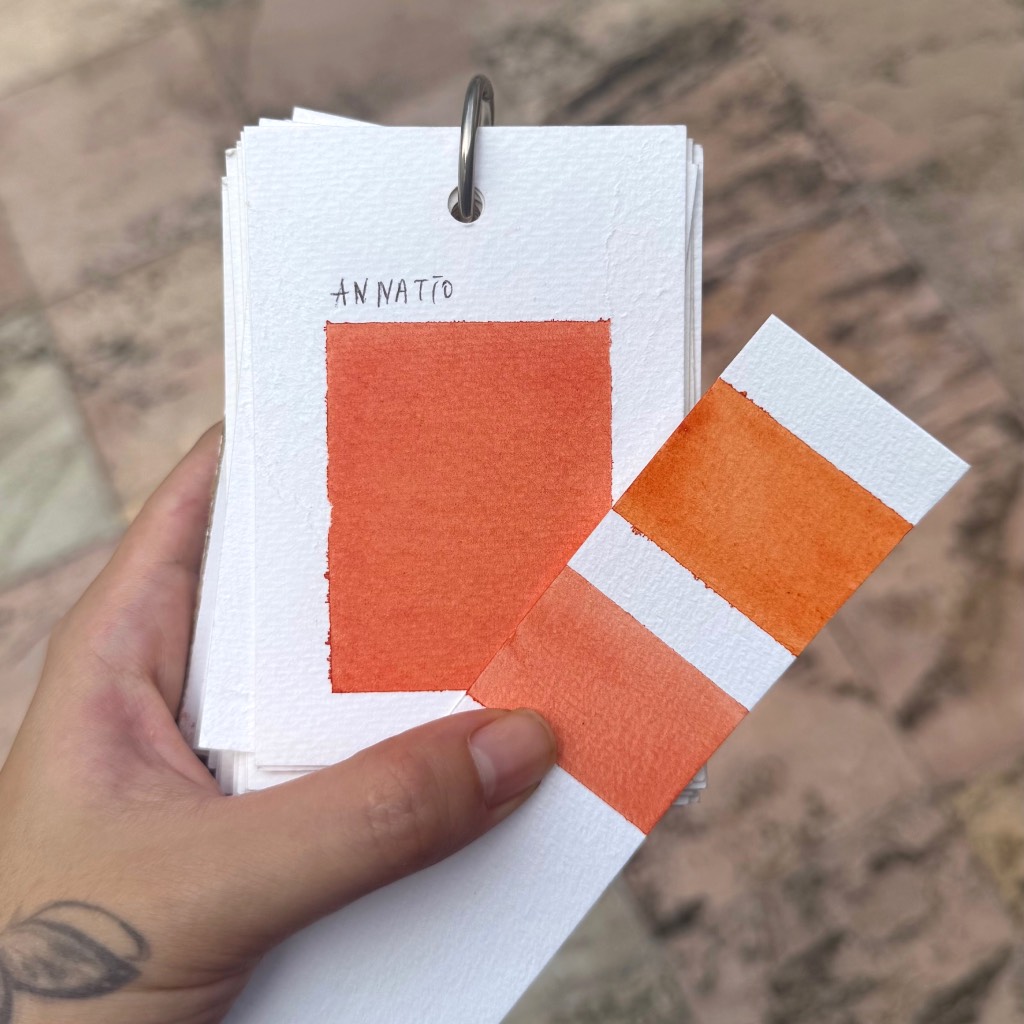
To the dye, alum and alkali powders are added to precipitate the pigments. Depending on the measurements, the forming layer of pigments vary in their hues from orange to red, and also in their opacity. The pigments are then slowly ground down into a fine powder after drying. Different binders, such as tree gums and linseed oil, can be added to make paints with differing qualities.