Sappanwood
of peaches, bougainvilleas, and paddle pop rainbow ice cream
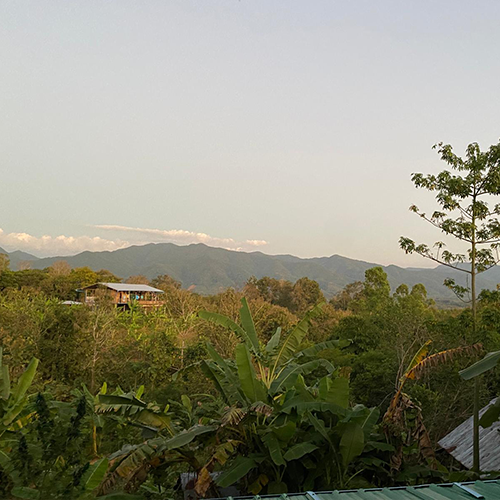
The first time we dyed something with sappanwood was at a permaculture farm in North Thailand. I remember the farm by the spacious sala (open pavilion) of the main house, where one could sit and have a gorgeous view of the mountains in the distance. Once a year, they organize a music festival which brings together musicians, artists, farmers, and people who live around the area for lots of festive fun and food. We joined the festival for a day back in December 2023, where we met a few textile dyers from Thailand who were doing eco-printing and dyeing with plants.
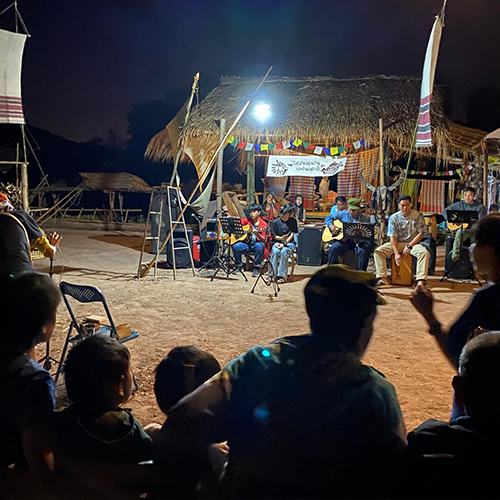
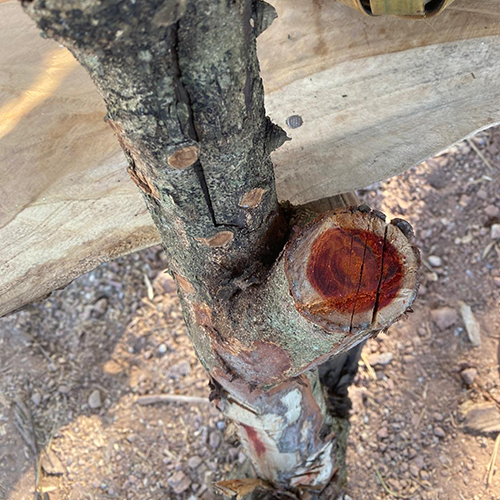
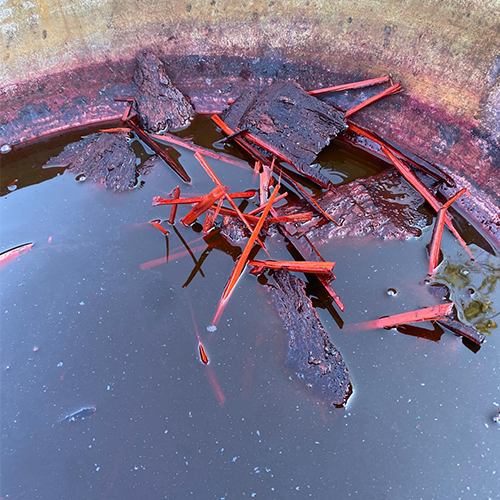
Somewhere in the festival, one of the dyers had set up a large metal pot with lots of wood chips soaking in a dark red liquid over the fire. I remember feeling really excited about the richness of the dye, and guessed that since we were in Thailand, that was most probably the sappanwood tree. We had read about the rich dye from this tree in many books, and also experimented lightly with it during a session we held at the Singapore Botanic Gardens some years back (there is one sappanwood tree in the dye garden!). But it is not an easy tree to find here, so this colour was just left at the back of our heads, until a walk into an herbal tea store at the Geylang Serai Market.
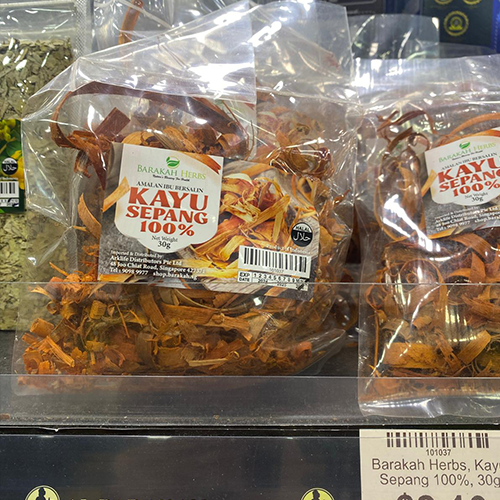
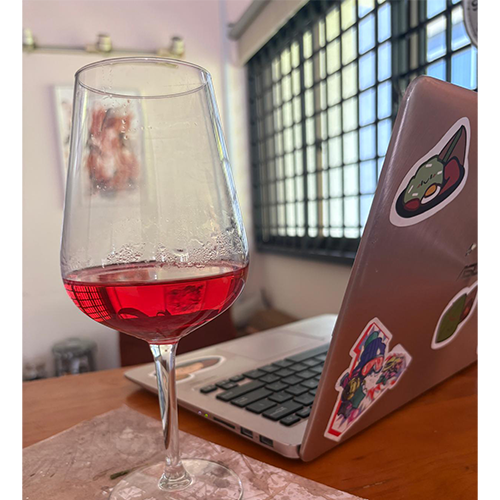
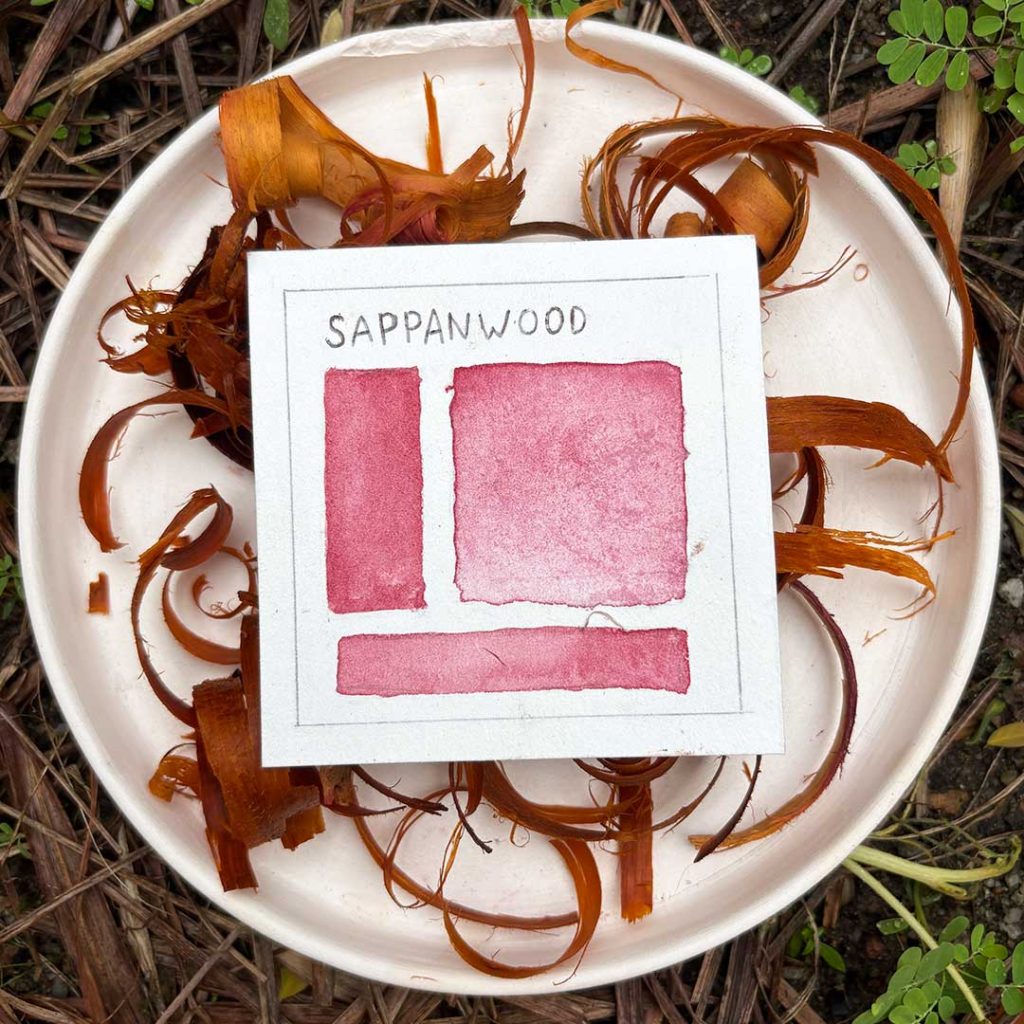
At the Al-barakah store, sappanwood shavings are sold in small packets alongside other dried teas such as the roselle, misai kuching, and a peculiar plant that ants use as their nests called sarang semut. Sourced from Indonesia, the red-orange wood shavings initially gives a transparent orange dye when it is simmered, like the flesh of ripened peaches. Brewing a glass of tea with it gives a soft aroma that I would broadly describe as floral; it may remind one of incense wood used in the Taoist temples. The tea also tastes very slightly sweet.
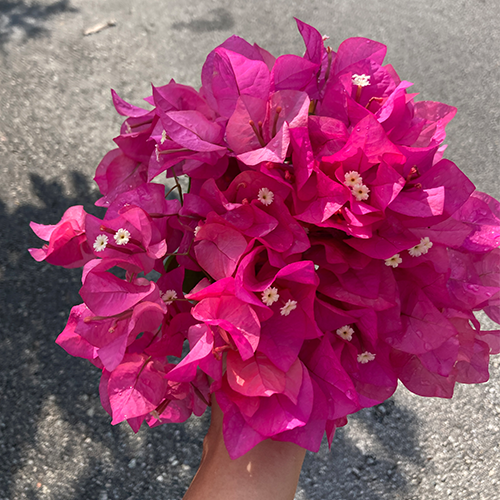
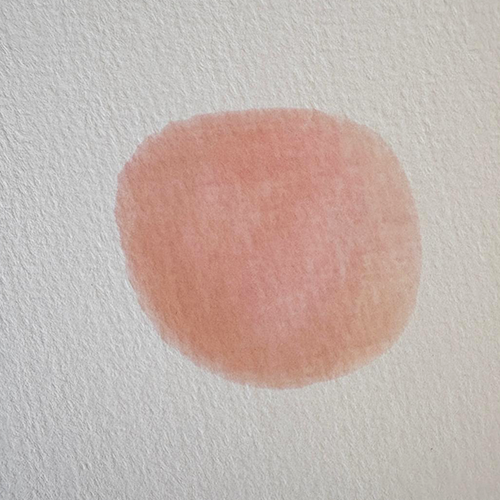
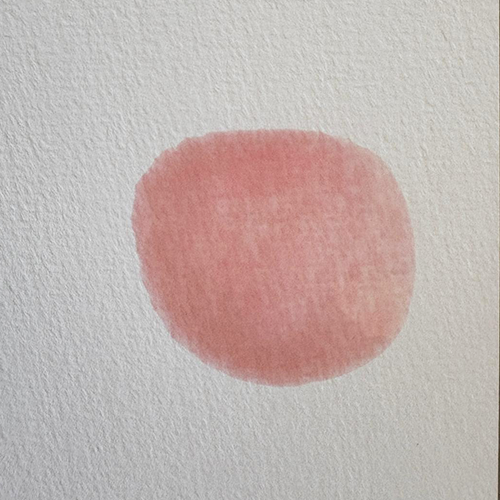
I let the shavings do their thing in a gentle simmer over an hour. Initially, the dye is a transparent rosy orange. Applying it as an ink on watercolour paper has interesting results – the initial peach orange becomes a light pink as it oxidizes. As it dries, it darkens into a deeper pink that reminded me of some of the hot pink bougainvilleas in our neighbourhood.

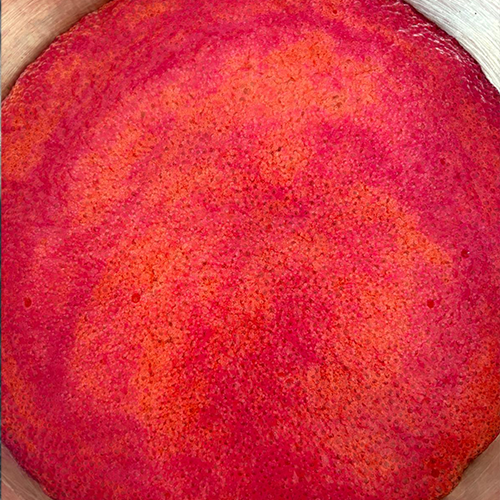
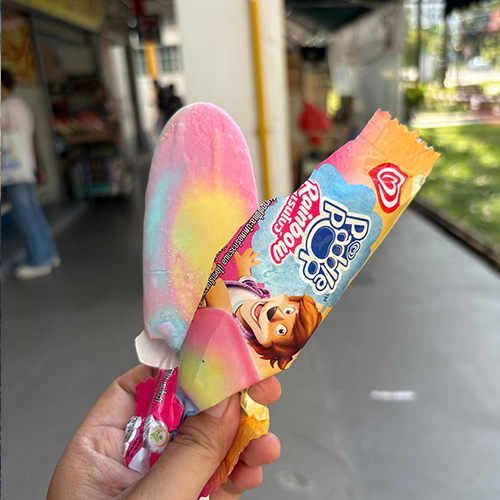
To extract the pigments, alum and soda ash were added to this dye. Almost immediately, soft electric pink bubbles started to foam rapidly. This part of the process is so satisfying to watch. Since sappanwood is sensitive to pH, I noticed different bands of colouration in the gas as the pigmentation occurs, with streaks of pinks and creamy yellow swirls, almost like my favourite childhood paddle pop icecream.
A hot pink like this is not so common to make as natural pigments, so we decided to make sappanwood one of our mainstay paints. Currently, it is part of our “skintone” tricolour palette, complementing indigo and construction clay paints on our Etsy shop.